
Industrial work is the third world of the trade, after residential and commercial. It covers factories, food plants, cold storage warehouses, arenas, and process facilities. The systems are the largest in the trade, and the work is the most specialized.
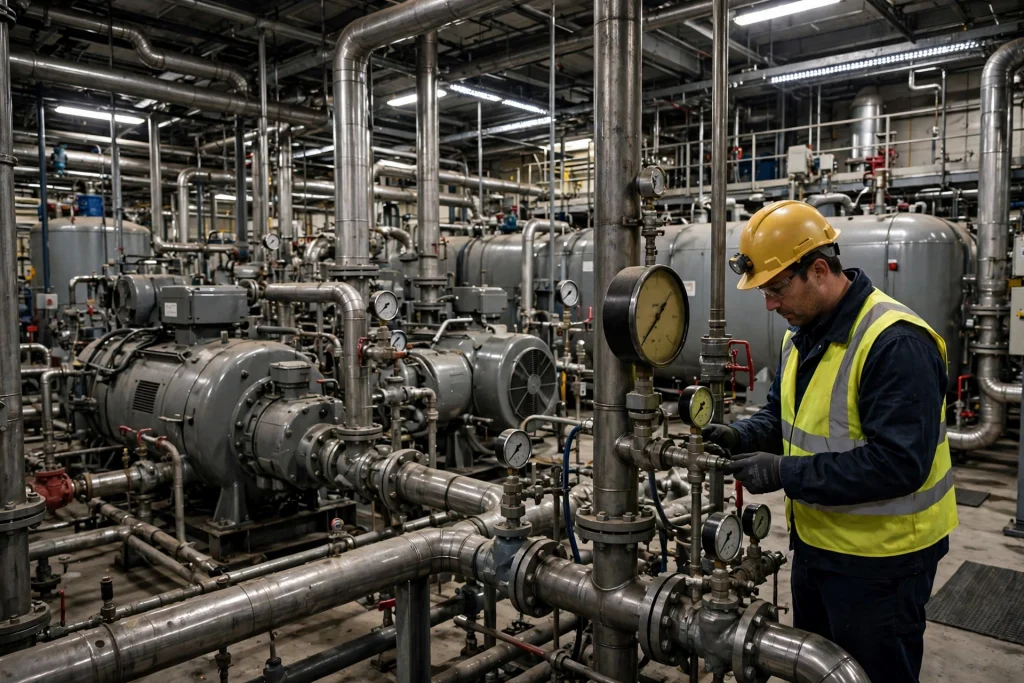
A tech in industrial work spends less time in houses and offices and more time in plant rooms, on rooftops over factories, and in facilities where cooling is part of making a product, not just keeping people comfortable.
What the work looks like
Industrial systems are big. A single refrigeration system in a food plant can be larger than the whole heating and cooling system of an office building. The equipment includes large compressors, condensers, evaporators, boilers, cooling towers, and long runs of piping.
The refrigerant in many industrial plants is ammonia. Ammonia systems are efficient and common in food processing and cold storage, but they need extra training and strict safety procedures. Some industrial sites also use other refrigerants and process cooling fluids.
The work follows the plant, not the weather. Production runs on a schedule, and the refrigeration has to run with it. Maintenance is planned around shutdowns, when the plant stops for a set period so techs can work on equipment that cannot be shut down during production. Breakdowns during production are urgent, because a failed system can stop a line or spoil product.
Safety and tickets
Industrial work has more rules than residential or commercial work. A plant will have its own safety procedures, lockout steps, permits, and protective equipment requirements. A tech has to follow the site rules on top of the normal trade safety practices.
Extra tickets and training are common. Some industrial sites require additional operator or safety tickets beyond the trade licence, and ammonia work needs specific training on that refrigerant. A tech who wants industrial work should expect to keep adding training through their career.
Positives of industrial work
The pay is often the highest in the trade, and the work is steady because plants run all year. The systems are the most interesting and complex, so a tech who likes big equipment and problem solving will not get bored. There is a lot to learn, and that learning is valued. Shift work can mean fewer days on the job for the same hours. Some industrial jobs involve travel to different plants, and a few involve fly-in work at remote sites, which pays a premium.
Negatives of industrial work
The work can be hard on the body and the schedule. Shift work means nights, weekends, and holidays. Shutdowns mean long days, sometimes twelve hours or more, for days or weeks at a time. Ammonia and other industrial refrigerants carry real risk, and the safety procedures are strict for a reason. The work is less varied in one sense: a tech can spend years on the same plant and the same systems. Getting in is harder, since plants want experience and extra tickets before they hire. Some plants are in remote places, so the drive or the travel can be long.
How it differs from commercial work
Commercial work and industrial work can look similar from the outside, since both involve large buildings and big equipment. The difference is what the system is for. In a commercial building, the system keeps people comfortable. In an industrial plant, the system keeps a product cold, a process running, or a building safe to work in. That difference changes the stakes. A failed rooftop in an office is uncomfortable. A failed refrigeration system in a food plant can shut down production.
Industrial techs also work more with plant operators and engineers and less with building managers. The paperwork, the permits, and the safety meetings are a bigger part of the day.
Getting into industrial work
Most industrial techs do not start there. They start in commercial work, learn the trade on rooftops and boilers, and then move into a plant once they have the experience. The extra training comes after that, often paid for by the employer or the plant.
A tech who wants this path should look for commercial companies that do industrial service, or apply directly to plants and industrial contractors. The application will ask about experience with large systems, ammonia training, and safety tickets. A tech who has those will stand out. A tech who does not can still get in by starting on the commercial side of an industrial contractor and working toward the plant work.
Who it fits
Industrial work fits a tech who likes big systems, does not mind shift work, and is willing to keep training. It fits a tech who is careful with safety procedures and comfortable working in a plant environment. It is less suited to a tech who wants a regular daytime schedule or who prefers working alone in houses.
Some techs move into industrial work after years in commercial, once they have the experience and the tickets. Others start there early and build a career in one plant or one company.
Related posts
- Thermistor: how a temperature sensor reports to the board.
- Pressure Switch: how a switch proves airflow or pressure before a system runs.
- Non-invasive Testing: checking a system without opening it up.